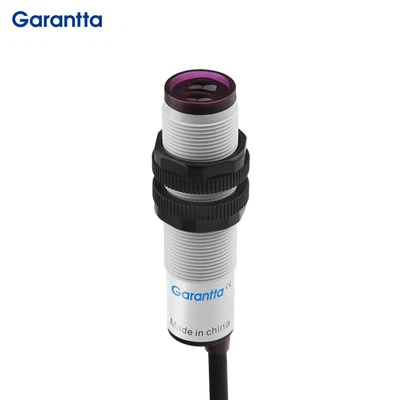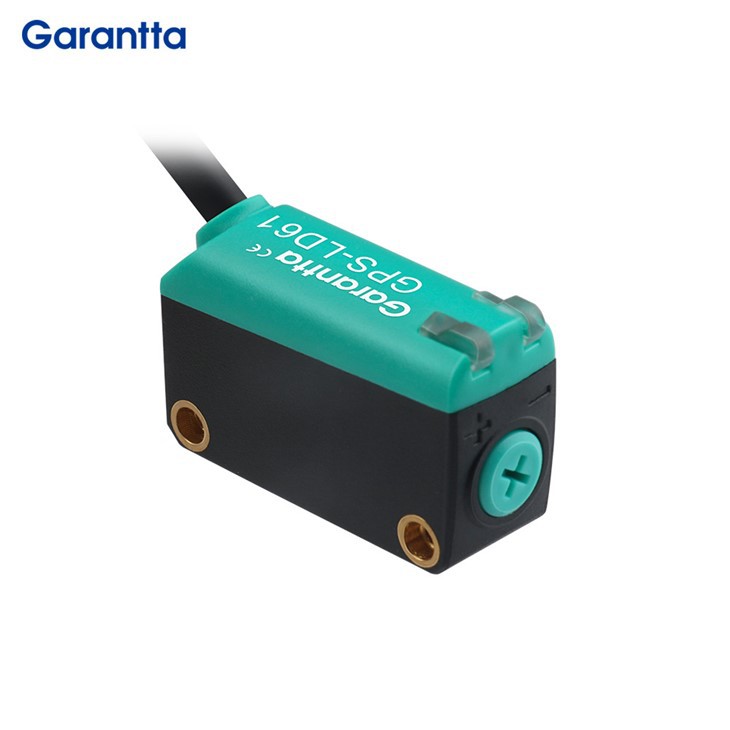
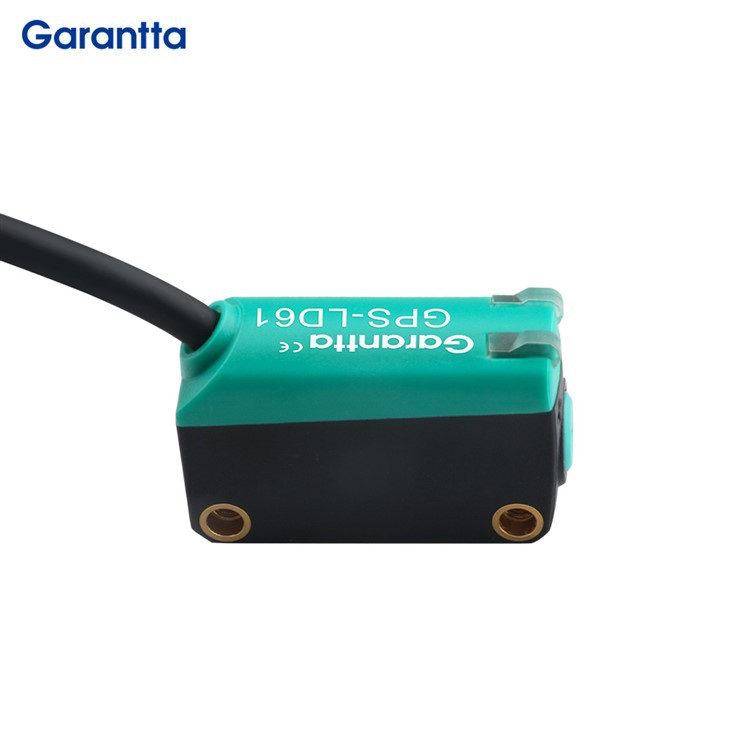
The micro laser sensor operates on a clever principle: it assesses characteristics like distance, size, and the surface texture of an object by evaluating the time it takes for a laser beam to travel and return, or by comparing differences in light energy. These sensors are indispensable in scenarios demanding extensive range measurement, robust power, and exceptional precision. Whether it's for measuring distances, displacements, thicknesses, or various other applications, laser sensors are the go-to tools.
Key Features
1. Extremely High Detection Accuracy and Repeatability
Laser light sources possess excellent directionality and focusing capabilities, forming extremely fine, energy-concentrated light spots (reaching millimeter or even sub-millimeter levels). This enables miniature square laser sensors to achieve high-precision position detection, small object recognition, and edge positioning, with detection repeatability far superior to that of ordinary LED diffuse reflection sensors. It is particularly suitable for applications requiring extremely high precision, such as precision assembly, semiconductor processing, and electronic component inspection.
2. Excellent Resistance to Ambient Light Interference
Laser light is coherent light of a single wavelength. The optical filter and tuning circuit inside the sensor can very effectively filter out stray light from the environment (such as sunlight and workshop lighting). This feature ensures stable and reliable detection performance even in complex lighting environments with strong light or drastic light changes, effectively avoiding false triggers and significantly improving reliability.
3. Compact and Robust Structure with Flexible Mounting Options
Using a miniaturized, compact square or rectangular design (such as 12mm x 30mm), combined with a robust housing, it is ideal for installation inside modern automated equipment with limited space. Its square structure typically offers multi-sided mounting and flexible optical axis direction, making it easy for engineers to find the best mounting position and angle in complex mechanical structures, achieving optimal detection path planning.
4. Support for Diverse Advanced Detection Modes and Functions
Thanks to the characteristics of lasers, these Micro Laser Sensor can not only perform basic through-beam and diffuse reflection functions, but also easily integrate cost-effective background suppression (BGS) and distance setting (background analysis) functions. It can accurately distinguish between the target object and the background, or set a precise detection distance range, effectively solving the problem of misjudgment in traditional photoelectric sensors under complex backgrounds or when the detection distance changes.
5. Powerful Long-Distance Detection and Small Object Detection Capabilities
The laser beam has concentrated energy and slow attenuation, so even miniature sensors can achieve detection distances far exceeding those of similarly sized LED photoelectric sensors (through-beam type can reach several meters or even tens of meters). At the same time, the extremely small light spot allows it to reliably detect tiny objects (such as fine wires, pins, and teeth of precision gears) without interference from the surrounding environment, expanding its application boundaries in the field of micro-detection.
Install steps
Firstly, you need to install the Micro Laser Sensor. Position it aptly on the subject you're measuring, often utilizing brackets or fixtures to keep it steady. It's crucial to ensure the laser beam's direction and angle are spot on for precise readings.
Next, configure the sensor's parameters. This includes settings for measurement range, resolution, and sampling rate. Tailoring these settings to your specific needs can greatly enhance both accuracy and efficiency.
Then, connect the Micro Laser Sensor to your computer or another compatible device to process and display the gathered data. When doing so, pay close attention to the interface type and connection method to ensure seamless, reliable data transmission.
Now, you're ready to make measurements. Beforehand, familiarize yourself with the measurement environment and select the most suitable method. Keep a watchful eye on the laser beam's angle and distance to maintain accuracy and safety throughout the process.
The reach of laser sensors varies, influenced by factors such as laser power, beam divergence, detector sensitivity, and signal-to-noise ratio. Typically, these sensors can measure distances ranging from millimeters to kilometers.
For instance, in industrial automation, where precision at close quarters is crucial, laser sensors often operate within a range of millimeters to tens of meters. On the other hand, when measuring vast distances, like mountain heights or long stretches, they can extend their reach to thousands of meters.
Remember, though, that environmental conditions-like weather, atmospheric clarity, and other variables-also play a role in determining how far a laser sensor can accurately measure.
Hot Tags: micro laser sensor, China micro laser sensor manufacturers, suppliers, factory, dual thermocouple type k, Miniature Inductive Proximity Sensor, proximity sensor range in mm, capacitive sensor switch, Optical Slot Sensor, Label Gap Sensor