

Welcome all friends to be our Ultrasonic Sensors Agent. More details, please feel free to contact us (info@garantta.com)
As one of the professional Ultrasonic Sensors manufacturers and suppliers in Shenzhen, China, we can also provide you with other sensor products(photoelectric sensors, proximity sensors, laser sensors, fiber optic sensors, color mark sensors, safety light curtains, etc.) Welcome to wholesale the best sensor products at a competitive price from our factory.
-
![Cylindrical Ultrasonic Sensor]() Cylindrical Ultrasonic Sensor1.The measurement process is not affected by the color, transparency, glossiness, and ambient light of the object. 2.The metal shell is sturdy and durable. 3.The blind area is small, and theread more
Cylindrical Ultrasonic Sensor1.The measurement process is not affected by the color, transparency, glossiness, and ambient light of the object. 2.The metal shell is sturdy and durable. 3.The blind area is small, and theread more -
![Ultrasonic Proximity Switch]() Ultrasonic Proximity Switch1.Color & Transparency InsensitiveUltrasonic wave detection works for black, white, transparent and translucent objects via sound reflection
Ultrasonic Proximity Switch1.Color & Transparency InsensitiveUltrasonic wave detection works for black, white, transparent and translucent objects via sound reflectionread more ![Ultrasonic Proximity Sensor]() Ultrasonic Proximity Sensor1. Unaffected by Light: Works stably in all weather conditions, including strong light, dim light, backlight, and complete darkness, outperforming photoelectric sensors. . 2. Suitable for Allread more
Ultrasonic Proximity Sensor1. Unaffected by Light: Works stably in all weather conditions, including strong light, dim light, backlight, and complete darkness, outperforming photoelectric sensors. . 2. Suitable for Allread more![Square Ultrasonic Sensor]() Square Ultrasonic Sensor1. Industrial-grade durable design, utilizing a high-performance engineering plastic housing, capable of withstanding various harsh industrial environments. 2. Flexible multi-protocol integratedread more
Square Ultrasonic Sensor1. Industrial-grade durable design, utilizing a high-performance engineering plastic housing, capable of withstanding various harsh industrial environments. 2. Flexible multi-protocol integratedread more


008613530821762
info@garantta.com
008613530821762
Garantta Ultrasonic Sensor
Ultrasonic single and double sheet detection sensor are mainly used to detect paper or plastic, metal films. When these materials pass through the sensor, the sensor can recognize three states: no paper, single sheet paper, and multiple sheets of paper, and output corresponding status signals. Mainly used in industries such as printing, papermaking, stamping, and instant noodle packaging machines.

Square Ultrasonic sensor
- The plastic shell is light and has good corrosion resistance,Small blind area and larger detection range;
- Strong anti-interference ability, enhanced anti-electromagnetic interference and radio frequency interference;
- Equipped with NPN, PNP switch output, RS485 communication output, and 4-20mA, 0-10VDC analog output;
- The detection distance and detection range can be set arbitrarily through the remote setting line,
- Completely unaffected by dust, dirt and fog.
Cylindrical type Ultrasonic Sensor
- Smaller blind area and longer detection distance, up to 2m;
- Equipped with NPN, PNP switch quantity and 4-20mA, 0-10VDC analog quantity simultaneous output.
- The detection distance and detection range can be set arbitrarily through the setting button of the window or the remote setting line;
- Completely unaffected by dust, dirt and fog.

Technology First
Wide Product Sizes Range
口25, M18, M30, φ40, φ73 are available in a variety of sizes;
Long Distance Detection Distance
Smaller blind area and longer detection distance, up to 6m;
Multiple Potection Function
With short-circuit protection and power polarity protection functions, it can effectively prevent circuit damage;
Self-learing Function
Self-learing function is realized through multi-function input, and the detection distance can be set arbitrarly by remote butons or cables
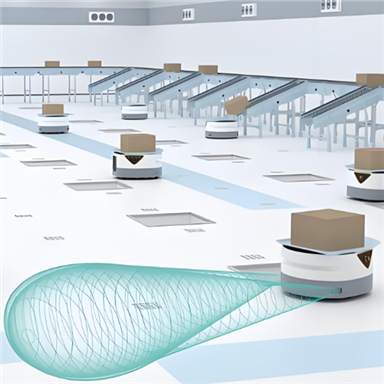
Applications of Ultrasonic Sensor




why choose Garantta Ultrasonic Sensor
Professional manufacturer
Our factory is in Dongguang City, our sales office is in Shenzhen City, welcome to visit us at any time
Experienced engineers
50+ skilled workers; 7+ experienced engineers; 5+ professional international sales
One-stop Solution
Main products included ultrasonic sensor, safety light curtains, measuring light curtains, photoelectric sensor, proximity sensor, color mark sensor, fiber optic sensor
Quality & Technical support
3 years quality warranty and all-life technical support, there is no worried on after sales serivce
First, click on our website www.garantta.com, find the ultrasonic sensor model you want, contact the sales on our website, and discuss the order details in detail.
Our address
Room 1007-1008, 10th Floor, Building 7, Hengda Fashion Valley, Dalang Street, Longhua New District, Shenzhen
Phone Number
+86 13530821762
info@garantta.com
ga00004@garantta.com

FAQ
Q: Principle of Ultrasonic Single-sheet and Double-sheet Sensors
A: Ultrasonic single-sheet and double-sheet sensors are a commonly used ultrasonic measurement technology. The difference between single-sheet and double-sheet sensors lies in the way ultrasonic waves are reflected during propagation. Single-sheet sensors have only one crystal, which sends sound waves after detecting an object and monitors its reflected signal; while double-sheet sensors have two crystals, one for sending sound waves and the other for receiving reflected signals. The working principle of ultrasonic single-sheet and double-sheet sensors is based on the speed of sound and the reflection of sound waves. By emitting ultrasonic waves to an object and measuring the time difference of the reflected signals, the distance between the object and the sensor is calculated. The distance between the object and the sensor is determined by calculating the propagation time of the sound wave, thereby achieving non-contact object detection.
Q: Application industries of single-sheet and double-sheet ultrasonic sensors
A: Single-sheet and double-sheet sensors are widely used in paper printing machines, assembly machines, folding machines, packaging machinery, solar cells, silicon wafer manufacturing, labeling, PCB manufacturing, etc.
Q: What are the advantages and disadvantages of ultrasonic sensors?
A: The advantages of ultrasonic sensors include:
1. Recognition ability is not affected by object color or transparency: Ultrasonic sensors detect objects through sound wave reflection, so the color or transparency of objects will not affect their readings.
2. Operable in the dark: Unlike proximity sensors that rely on light or vision, ultrasonic sensors can still effectively detect in dark environments.
3. Strong anti-interference ability: Ultrasonic sensors are not easily affected by dust, dirt, or high humidity environments, especially under extreme conditions, and they can provide more accurate readings than many other sensors.
4. High precision demonstrated in applications: Ultrasonic sensors can provide high measurement accuracy in measuring the thickness or distance of parallel surfaces.
5. Strong penetration: Ultra sonic sensors have high sensitivity and penetration, and can detect external objects, even deep objects.
6. Strong ability to resist environmental interference: Ultrasonic sensors can work stably under any lighting conditions, whether indoors, outdoors, or in complex lighting environments. They are capable of non-contact detection of light, smoke, dust, color, and materials, so in some applications, ultrasonic sensors are more effective than infrared sensors, which may be affected by smoke or black substances.
7. Wide application range: Ultrasonic sensors can be used for various applications such as water level detection, unmanned aerial vehicle applications, automatic obstacle avoidance applications, distance detection, etc.
8. Multifunctionality: Ultra sonic sensors can be used for presence detection, level detection, position detection, distance detection, etc., which can meet the needs of most non-contact detection.
The limitations of ultrasonic sensors include:
1. Cannot work in vacuum: Ultrasonic waves cannot be used in vacuum because they require air to propagate.
2. Not suitable for underwater applications: Water absorbs sound waves, affecting the detection capability of sensors.
3. Soft materials affect detection accuracy: If the surface of an object is covered with very soft materials, it may absorb more sound waves, making it difficult for the sensor to detect the target.
4. Temperature changes affect accuracy: Temperature changes may affect the accuracy of ultrasonic sensors. Although modern sensors provide temperature compensation functions that can be calibrated based on temperature and voltage changes, they may still be affected.
5. Small objects are difficult to detect: If an object is too small, it may not reflect enough sound waves to be detected by sensors.
6. Specific shapes are difficult to detect: The shape or position of certain objects may cause sound wave reflections to deviate from the sensor.
Q: What are the functions of ultrasonic sensors?
A: Ultrasonic sensors have the function of detecting liquid levels, transparent objects, and materials. Ultrasonic sensors can control tension and measure distance, mainly used in equipment transportation for packaging, bottle making, material handling, coal inspection, plastic processing, and the automotive industry. Ultrasonic sensors can be used for process monitoring to improve product quality, detect defects, determine presence or absence, and other aspects.
Q: What precautions should be taken during the installation and use of ultrasonic single and double sheet sensors?
A: In terms of installation, first of all, the accuracy of the sensor installation position should be ensured. It should be kept perpendicular to the paper transmission path, so that the ultrasonic wave can be vertically projected to the paper and the most accurate reflection signal can be obtained. The installation height must also be adjusted strictly according to the equipment manual. Being too close or too far from the paper may affect the detection accuracy. For example, being too close may cause the reflected wave to be too strong and saturated, while being too far may cause the reflected wave to be too weak to be effectively detected. During use, the transmitting and receiving ends of the sensor should be cleaned regularly to prevent dust, paper scraps and other impurities from accumulating and affecting the transmission and reception of ultrasonic waves. At the same time, pay attention to the temperature and humidity of the working environment, because extreme temperature and humidity conditions may change the propagation characteristics of ultrasonic waves, thereby affecting the reliability of detection. For example, in a humid environment, water vapor may interfere with ultrasonic propagation and cause misjudgment.
Q: What is the detection accuracy of ultrasonic single-sheet and double-sheet sensors?
A: In general, high-quality ultrasonic single-sheet and double-sheet sensors have very high detection accuracy, and the correct recognition rate of single-sheet and double-sheet paper can reach more than 99%. Its accuracy mainly depends on the hardware performance of the sensor, such as the sensitivity of the transmitting and receiving elements, the accuracy of the signal processing circuit, etc. At the same time, it is also related to factors such as the material and thickness of the paper. For paper with uniform thickness and stable material, the sensor can achieve extremely high detection accuracy. However, for some special materials, such as paper with coating or uneven texture on the surface, the accuracy may be slightly affected, but through appropriate parameter adjustment and calibration, a high detection accuracy can still be guaranteed. For example, in fields such as banknote printing, which require extremely high accuracy in detecting single and double sheets of paper, ultrasonic single and double sheet sensors can fully meet production requirements after fine debugging and effectively guarantee product quality.
Q: How long is the service life of single-sheet and double-sheet ultrasonic sensors?
A: The service life of ultrasonic single-sheet and double-sheet sensors is affected by many factors, and its service life is generally around 3-10 years.
1. Internal component quality factors The quality of the core components of the sensor, such as ultrasonic transmitters and receivers, is the key. Transmitting and receiving components made of high-quality piezoelectric ceramics and other materials can be used for a long time under normal use conditions. For example, some sensors that use high-purity piezoelectric materials and undergo fine manufacturing processes can maintain stable performance of their internal components for a long time, and their service life may reach 8-10 years. The quality of the signal processing circuit will also affect the service life. If the circuit design is reasonable and high-quality electronic components, such as durable capacitors, resistors and integrated circuit chips, are used, it can reduce failures caused by aging of electronic components and help extend the overall life of the sensor. 2. Environmental factors The temperature of the working environment has a significant impact on the life of the sensor. In the appropriate temperature range, such as 0-40 degrees Celsius, the performance of the internal components of the sensor is relatively stable. However, if it is in a high temperature environment for a long time (such as more than 60 degrees Celsius), it may accelerate the aging of components, especially plastic housings and electronic components. High temperatures may cause the housing to deform, the circuit solder joints to loosen, and affect the performance of the ultrasonic components, shortening the life of the sensor to 3-5 years or even shorter. Humidity is also an important factor. High humidity environments may cause moisture inside the sensor, causing short circuits or corrosion. In a humid environment, if there is no good waterproof and moisture-proof measures, the life of the sensor may be greatly reduced. Dust and impurities in the environment are also not conducive to the long-term use of the sensor. Dust may accumulate on the surface of the ultrasonic transmitter and receiver, affecting the efficiency of ultrasonic transmission and reception. Long-term accumulation may damage the surface of the component, reduce the performance of the sensor, and thus shorten the service life.
3. Frequency and intensity factors of use High frequency of use will accelerate the wear of the sensor. If the sensor needs to be tested continuously, such as in a high-speed paper production line, where multiple tests are performed per second, the internal components will wear out faster than in low-frequency use. The sensor may also be damaged by large mechanical shock or vibration. Frequent mechanical movement near the installation location or impact during equipment transportation may cause the internal components of the sensor to shift or be damaged, thereby shortening its service life.
Q: Installation instructions for ultrasonic single-sheet and double-sheet sensors
A: When using single-sheet and double-sheet ultrasonic sensors, customers must ensure that the angles of the two probes are aligned during installation and that the angle of the two probes cannot be offset to ensure that the vertical transmission and reception are in an equal relationship during the transmission and reception process.
Q: Installation of ultrasonic double sheet sensor
A: Ultrasonic double sheet sensor can be installed perpendicular to the paper. When detecting ordinary paper and film, the swing of the paper will not affect the function of the system. For thin metal sheets and thicker plastic films (such as credit cards), it is recommended to install the system at a 27° tilt. For special types of thicker paper, the system should be installed at a 27° to 30° tilt.
Q: Principle of ultrasonic single and double sheet sensor
A: A high-frequency ultrasonic transmitter emits an ultrasonic beam from the bottom of the sheet. The sound wave causes the sheet to vibrate, which in turn generates a very small sound wave on the other side of the sheet. This small sound wave is received by the ultrasonic receiver. If there are two sheets, one on top of the other, the signal becomes even weaker and basically cannot reach the receiver.
As one of the leading ultrasonic sensor manufacturers and suppliers in China, we warmly welcome you to buy discount ultrasonic sensor for sale here from our factory. All our products are with high quality and competitive price.
ultrasonic sensor for quality control in big data, ultrasonic sensor for ear nose and throat applications, ultrasonic sensor for object detection