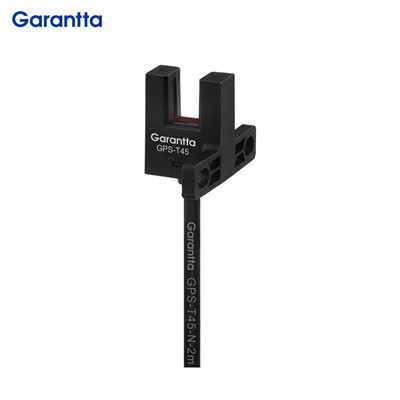
M12 Ultrasonic Sensor Switch cylindrical threaded housing. It adopts ultrasonic time-of-flight (ToF) principle, dedicated for narrow installation spaces in automated production lines, packaging machinery, logistics conveying and precision industrial detection. Compared with traditional photoelectric sensors, it eliminates detection dead zones caused by object color, transparency, gloss and surface reflectivity, serving as a core universal sensor in small-scale industrial automation scenarios.
Core Advantages
1.Strong Environmental Adaptability: Not affected by object color, transparency, gloss, surface roughness, as well as ambient dust, fog, weak light and strong light; stably detect transparent objects (glass, plastic film), black matte objects and soft objects that photoelectric sensors cannot identify
2.Ultra-compact & Easy Installation: Standard M12 thread universal mounting, small footprint, flexible installation in narrow equipment gaps; no complex debugging required, supports teach-in one-key range setting
3.High Stability & Anti-interference: Independent anti-interference algorithm, suppresses ultrasonic crosstalk and ambient noise interference; temperature compensation ensures consistent measurement accuracy in seasonal temperature changes
4.Durable Industrial Grade: Nickel-plated brass housing + IP67 protection, resistant to industrial vibration, wear, moisture and corrosion, long service life for 24-hour continuous operation
Industrial Application
Relying on compact size and stable performance, M12 Ultrasonic Sensor Switch are widely used in precision industrial automation scenarios with limited installation space:
- Packaging & Printing Industry: Double-sheet detection of paper/film, packaging material in-place detection, carton positioning, printing machine material shortage alarm
- Logistics Conveying Equipment: Conveyor line object counting, goods presence detection, small material positioning and anti-collision monitoring
- Precision Assembly Automation: Robot auxiliary positioning, small parts spacing detection, assembly in-place judgment
- Liquid & Material Level Monitoring: Small tank liquid level detection, granular material low-level alarm, non-contact material level monitoring
- Special Scene Detection: Transparent bottle/container detection, frosted material and dark workpiece identification, humid and dusty workshop detection
Selection Key Points
- Confirm detection distance: Select matched model according to actual detection range, reserve 20% margin to avoid full-load operation
- Match output signal: Switching output for presence/counting; analog output for continuous distance measurement; IO-Link for intelligent equipment
- Target material avoidance: Avoid using for pure foam and wave-absorbing materials; prioritize high-frequency models for small targets
FAQ
- Q1: Can M12 Ultrasonic Sensor Switch detect soft and porous materials like foam and sponge?
A: Not recommended for high-precision detection. Porous soft materials will absorb most ultrasonic pulses, resulting in weak reflected signals, missed detection or inaccurate distance data. For such materials, laser displacement sensors are more suitable as an alternative solution.
- Q2: How to avoid crosstalk interference when installing multiple M12 ultrasonic sensors closely?
A: There are two effective solutions. First, physically stagger the installation position and increase the spacing between sensors to avoid signal overlapping. Second, utilize the sensor's frequency division function to set different working frequencies for adjacent sensors, which can completely eliminate ultrasonic crosstalk and ensure independent and stable operation of each device.
- Q3: Is vertical installation mandatory? What happens if the sensor is installed obliquely?
A: Vertical installation facing the target is strongly recommended. Oblique installation will cause ultrasonic signals to reflect to the deviation direction instead of returning to the probe, leading to reduced detection sensitivity, inaccurate distance values or even complete detection failure. A vertical installation angle ensures optimal signal reception and detection accuracy.
- Q4: What is the teach-in function used for, and when should I use it?
A: The teach-in function is a one-key calibration feature for sensing range and background suppression. It is mainly used after sensor installation, when replacing detection targets, or when the ambient background changes. It can automatically lock the effective detection range, shield invalid background interference signals, and greatly improve detection stability and accuracy in complex industrial environments.
Hot Tags: ultrasonic sensor switch, China ultrasonic sensor switch manufacturers, suppliers, factory, ultrasonic sensor for assembly line applications, ultrasonic sensor for conveyor belt applications, ultrasonic sensor for open channel flow measurement, ultrasonic sensor for packaging applications, ultrasonic sensor for powder level measurement, ultrasonic sensor for surgical applications