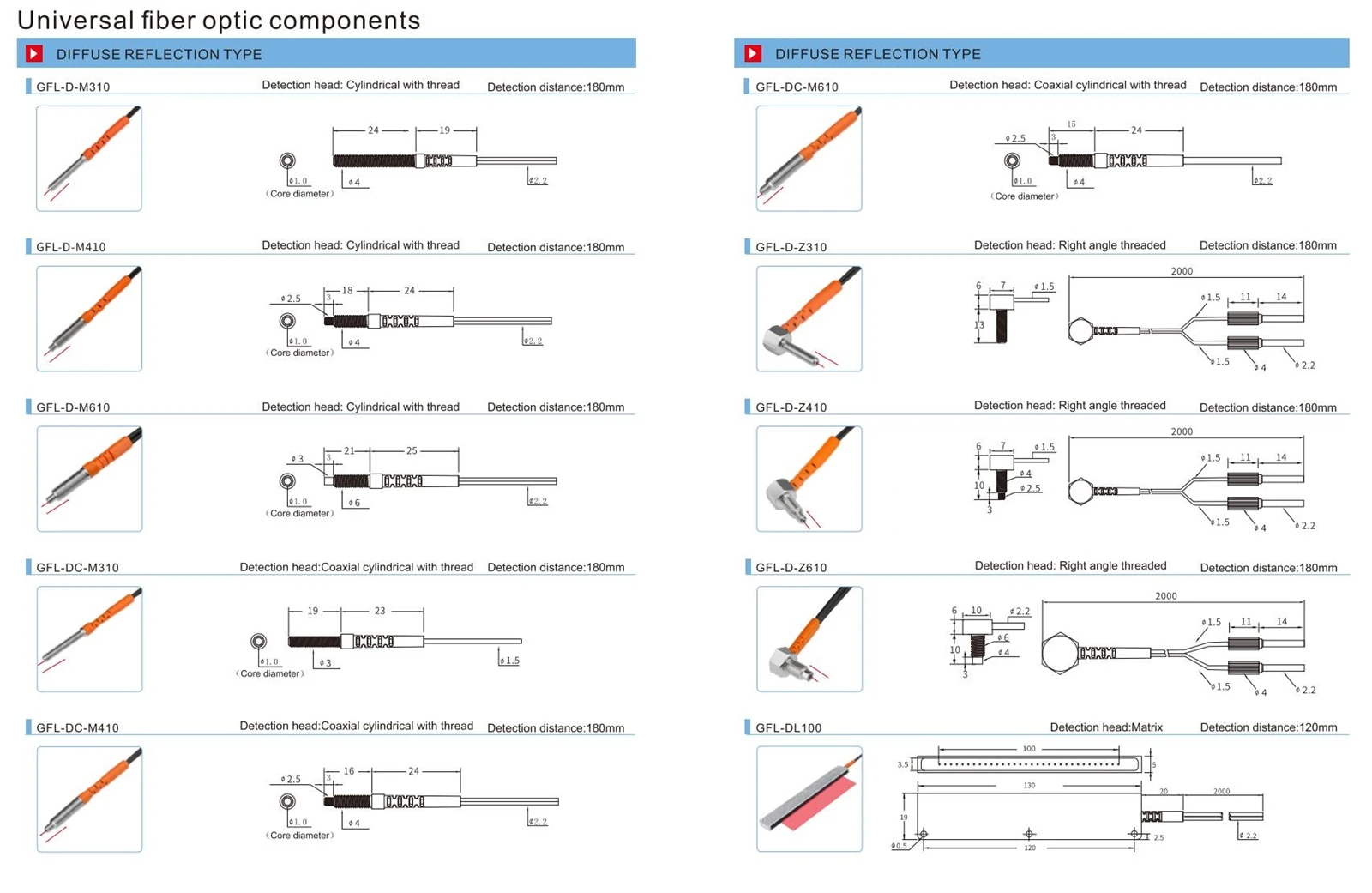
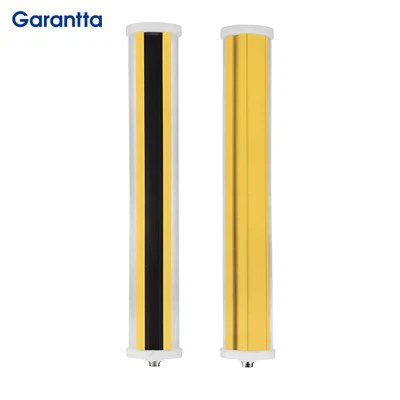
This Fiber Sensor Matrix + Fiber Optic Sensor Amplifier system is designed to distinguish between large and small objects, correct deviations, detect falling materials, and count pieces on assembly lines. It also provides reliable protection for your equipment, preventing accidental short circuits or burnouts, ensuring smooth and safe operations.
Working principle
Matrix optical fiber sensors use optical fiber arrays to build multi-channel detection systems. Its working principle is as follows: the light source emits optical signals in multiple directions through optical fibers. Signal, forming a two-dimensional or three-dimensional detection area; when an object enters the area and blocks or changes the light path, the optical fiber at the corresponding position receives a signal intensity changes and converts this change into an electrical signal; by analyzing the pattern or intensity distribution of the electrical signal, the system can accurately locate the position and shape of the object.
2 main categories of fiber sensor matrix
1. Through-beam type fiber optical sensor matrix
The through-beam type emits red light or infrared from the transmitter end, and the receiver end detects it. When an object interrupts the light beam, a signal is output.
2. Diffuse Reflection Type fiber sensor matrix
When the switch emits a light beam, the target generates diffuse reflection.
The emitter and receiver constitute a single standard component.
When a sufficient amount of scattered light returns to the receiver, the switch's state changes.


FAQ
Q: Comparison of Different Types of Fiber Optic Sensors
Based on the fiber optic sensing method and the placement of the fiber optic transmitter and receiver, there are three types of fiber optic sensors, namely. Contrast, Reflection, and Retro-Reflection.
- In "Cross-correlation Sensor", both the transmitter and receiver are placed pointing towards each other so that they form a straight optical path. When any object comes between the path, the intensity of the light changes, and hence the object can be detected.
- In "Reflection Sensor", the transmitter and receiver are parallel to each other. The light emitted by the transmitter is reflected by the object, and the reflection of the light is measured by the receiver. This type of sensor has the disadvantage of differentiating between red and white light when a red LED is used as the light source. This is because red and white have the same amount of reflection.
- In "Retro-reflection Type", both the transmitter and receiver are placed in one housing, and a reflector made of a special reflective material is used. A light beam is emitted, which is reflected by the reflector and received by the receiver. If anything comes in between the optical path, it breaks. Based on the difference between the intensity of the beam and other parameters, the object can be detected or sensed at the receiver.
Q: What about package methods on the fiber sensor matrix?
A: 1. We will ship our product abroad with a standard export package, but a customized package is also accepted. Generally, all orders will be shipped within 5 days after payment is confirmed.
2. For small quantities, we will ship our product to you by express.
3. For mass production, we will ship our product to you by Air or sea.
Q: For more details on the Garantta Fiber Optic Sensor, please contact us
WeChat/Phone:+ 86 13530821762
Email: info@garantta.com
Whatsapp:+ 86 13530821762
Hot Tags: fiber sensor matrix, China fiber sensor matrix manufacturers, suppliers, factory, fiber optic sensor systems, laser sensor with reflector, Temperature Sensor for Industry Furnace, fiber optic light sensor, optical displacement sensors, inductive current sensor