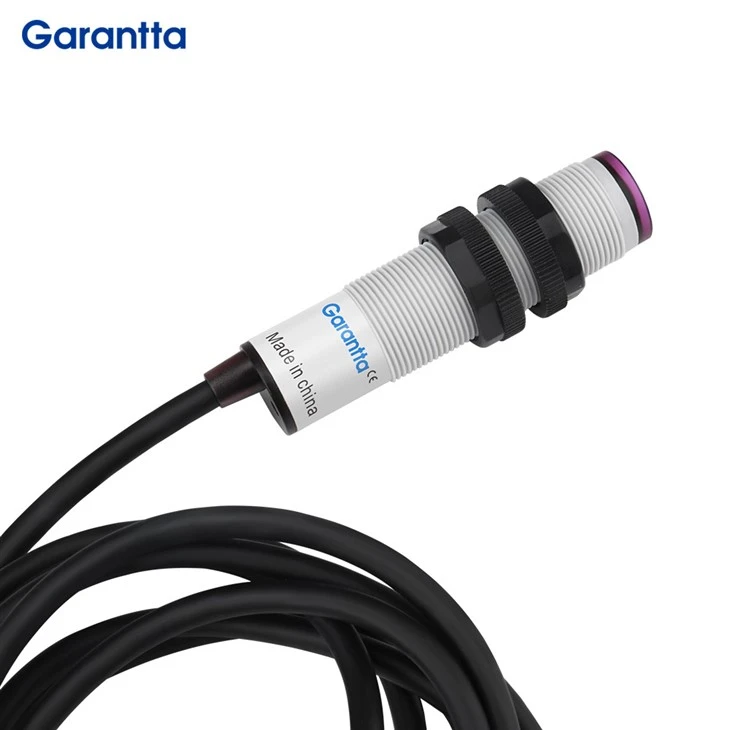
Optical Diffuse Sensor

Optical Diffuse Sensor
Details:
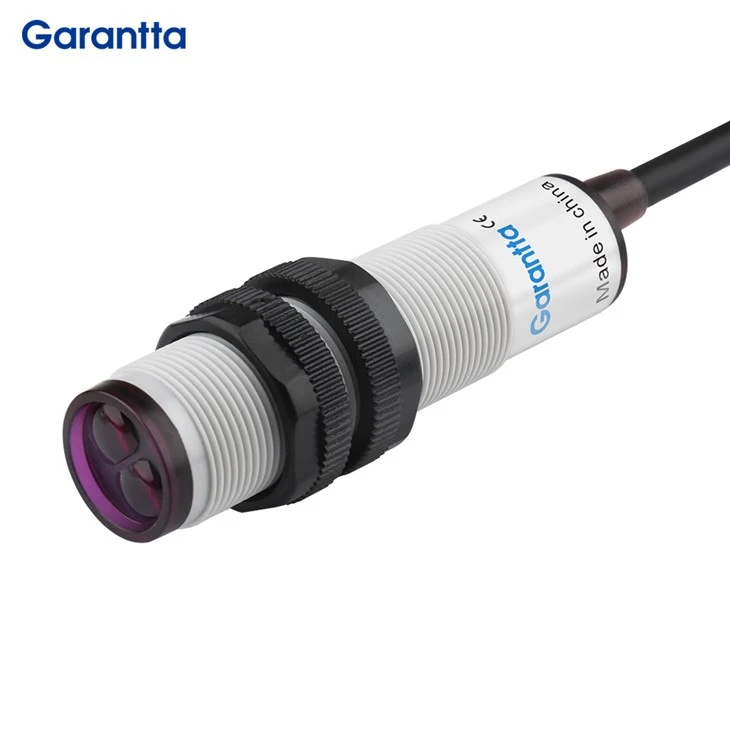
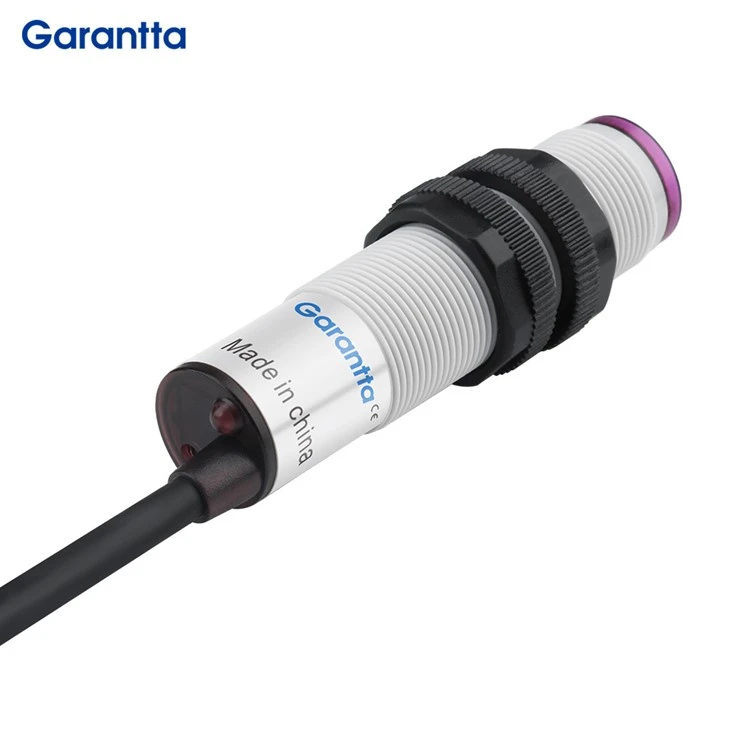
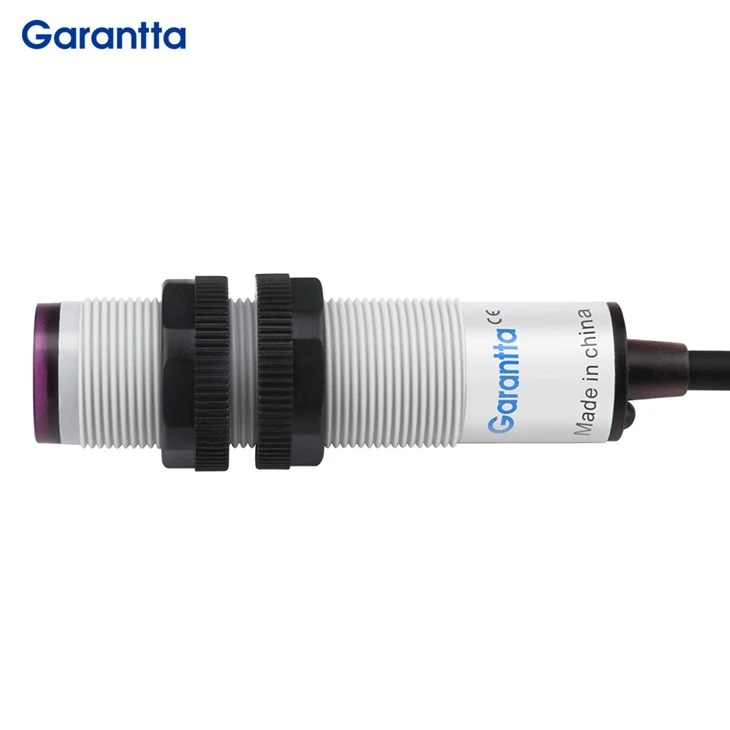
1. Standard M18 thread design allows for direct screwing into the device bracket, making installation extremely simple

2.Integrating transmission and reception, it can operate with single-sided installation, requiring no additional wiring or pairing, significantly simplifying system integration

3. Based on the principle of diffuse reflection, it does not make physical contact with objects, resulting in no wear and a long lifespan

4. Compared to through-beam sensors that require pairs, a single unit can achieve detection functionality, resulting in lower hardware costs

5. The engineering plastic housing (such as ABS) has a high protection rating of IP67 or higher, resisting dust, water mist, and washing
Send Inquiry
Download
Description
Technical Parameters
Size & Wiring


features of M18 optical diffuse sensor


1. User-friendly and straightforward to set up

2. Adopting a special IC design, built-in amplifier

3. Delayed start function to prevent false triggering at power-on

4. Built-in digital filter, reliable operation in harsh environments

5. Dual indicator light self-diagnosis function, adjustable sensitivity

6. Right-angle thermoplastic polyester housing, 18mm threaded lens, easy to install

7. High-power red LED offers excellent visibility with a wide viewing angle and long visible range.

8. Power reverse connection protection, output reverse connection protection, output overload protection, mode conversion function


Optical Laser Sensor-5
Optical Diffuse Sensor


Applications of M18 optical diffuse sensor


1. Inspecting Objects on Production Lines or Conveyor Belts:
Photoelectric sensors can detect the size of items to identify errors, missing parts, or issues like misaligned bottle caps. They are widely used in the food, pharmaceutical, and packaging industries.

2. Counting Small Items:
In production environments, small items may fall from vibrating conveyor belts into packaging systems or bags. Photoelectric sensors can accurately count these items.

3. Color Scanning in Printing and Packaging:
By scanning under red, green, and blue light, photoelectric sensors are used in various processes within the printing and packaging industry.

4. Monitoring Larger Areas with Grating:
Grating systems use parallel beams to cover a two-dimensional area, eliminating the need for multiple sensors and providing efficient, large-area monitoring.

5. Triangulation for Precision Measurement:
Using multiple sensors, triangulation compares reflected laser beams to accurately determine position and distance. This is useful in manufacturing systems and automated transportation applications.

6. Logistics and Material Handling:
Automated warehouses equipped with robotic pickers or vehicles rely on photoelectric sensors for position and object detection to ensure safe and efficient operations.

7. Automatic Door Systems:
In buildings or public transportation, photoelectric sensors detect when someone is near the door, enabling automatic opening and closing.


Optical Diffuse Sensor

FAQ


Q: How to avoid the false detection of background objects beyond the detection distance by diffuse reflection photoelectric sensors during operation?


Firstly, check if the background object detected by mistake has the characteristic of "high brightness reflection". High-brightness reflective background objects can interfere with diffuse reflection photoelectric work, giving incorrect reflected light and causing the sensor to give erroneous sensing. In addition, high-brightness reflective background objects have a certain degree of interference with diffuse reflection optoelectronics and background suppression optoelectronics.


Q: Common problems and solutions of photoelectric sensors


Common problems and solutions of photoelectric sensors
Optoelectronic sensors may encounter various problems during use. Here are some common issues and their solutions:


1, The sensor is not adjusted to the correct position
Problem manifestation: The sensor is not sensitive, and the signal is intermittent.
● Solution:
1. Reduce the distance between the measured object and the sensor, and check if the signal is stable.
If the installation position of the sensor cannot be changed, try replacing it with a sensor with a large range.


2, Sensor damaged
Problem manifestation: The sensor has no signal.
● Solution:
1. Observe whether the sensor is damaged, including the outer shell and internal components.
2. Check if the sensor wire is damaged or broken.


3, Weak signal at the emission end of the light source
Problem manifestation: The voltage is lower than the rated working voltage of the sensor, resulting in weak light output from the sensor's emitting end.
● Solution:
1. Use a multimeter to measure the voltage level, ensuring that the voltage is stable and meets the requirements of the sensor
2. Check if the signal and power lines are loose or have poor contact.


4, Loose connectors or improper insertion of pins
Problem manifestation: Poor contact leads to unstable signal transmission.
● Solution:
1. Observe whether the joint is loose and gently pull it with your hand to check if it is secure.
2. Check if the pins of the male and female plugs are in place to ensure good contact.


5, Line short circuit
Problem manifestation: Internal short circuit in the circuit, causing the sensor to malfunction.
● Solution:
1. Use a multimeter to measure if the circuit is conductive and check for any short circuits.
2. Gently shake the circuit during measurement to prevent measurement errors caused by poor contact.


6, External light source interference
Problem manifestation: External light sources cause weak or abnormal signals.
● Solution:
1. Cover the external light source above the sensor or use a light shield.
If it is determined that the external light source is the interference source, a shielding cover can be installed around the sensor.


7, Detecting object issues
Problem manifestation: Improper size, speed, or position of the object being measured, resulting in sensor malfunction.
● Solution:
1. Ensure that the size of the object being tested is larger than the standard detection object or the minimum detection object.
The passing speed of the tested object must be slower than the response speed of the sensor.
3. The tested object must be detected within the stable detection range of the sensor.


8, Environmental interference
Problem manifestation: The on-site environment has dust, and the light intensity exceeds the rated range, resulting in a decrease in sensor performance.
● Solution:
1. Regularly clean the surface of the sensor probe to prevent dust accumulation.
2. Adjust the light intensity to ensure it is within the rated range.
3. Install a shielding cover around the probe to prevent electrical interference.


9, Wiring or configuration error
Problem manifestation: Incorrect wiring or improper configuration, resulting in the sensor not working properly.
● Solution:
1. Check if the wiring is correct, including signal wires, power wires, and grounding wires.
2. Verify the configuration parameters of the sensor to ensure they match the actual application scenario.
In summary, photoelectric sensors may encounter various problems during use, but as long as corresponding solutions are taken based on specific issues, the stable and efficient operation of the sensor can be ensured. At the same time, regular maintenance and upkeep are also important measures to extend the service life of sensors and improve their performance.


Hot Tags: optical diffuse sensor, China optical diffuse sensor manufacturers, suppliers, factory, thermocouple type k extension cable, analog photoelectric sensor, T Slot Sensor Kits, Optical Diffuse Sensor, t slot photo interrupter, cost of k type thermocouple

Optical Diffuse Sensor


Optical Diffuse Sensor

Send Inquiry