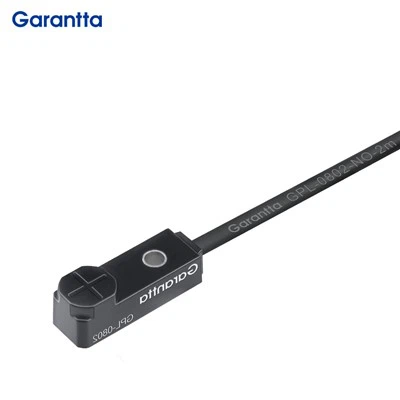
Garantta M30 series inductive proximity sensors are non-contact metal detection sensors for industrial automation. Brass nickel-plated housing, stable performance against vibration, dust and oil. Available in flush (shielded) and non-flush (unshielded) types, NPN/PNP, NO/NC options to fit your machinery.
Key Features
✅ Non-contact metal detection, no mechanical wear, long service life
✅ Full brass nickel-plated housing, corrosion resistance
✅ IP67 protection grade, suitable for dusty, oily workshop environments
✅ Flush (shielded): Can be fully embedded into metal mounting hole
✅ Non-flush (unshielded): Longer sensing distance, requires metal clearance during installation
✅ Wide operating voltage: 10~30VDC
✅ Stable output, strong anti-interference, multiple sensors can be installed side by side
✅ Multiple output combinations: NPN / PNP, Normally Open(NO) / Normally Closed(NC)
✅ Standard 2m cable, M12 connector optional upon request

Advantages
1. Non-contact detection
2. Environmental adaptability; resistant to conditions common in industrial fields, such as dust and dirt
3. Powerful and versatile in metal sensing
4. Quite cheap in terms of price
5. No moving parts, ensuring longer service life
Typical Applications
- Packaging machinery
- Conveyor lines & material counting
- CNC machine tools, metal workpiece positioning
- Material limit detection, presence detection
- Automotive automation equipment
- Logistics sorting equipment
> Note: Only detect metal targets. Sensing range will decrease for aluminum, copper and stainless steel compared with standard ST37 steel test piece.
Model Coding Rule
Example: GPL-M30KU20-NO-2m
GPL = Garantta Inductive Proximity Sensor
M30 = M30 Thread Size
K = Flush(Shielded) / L = Non-flush(Unshielded)
U = DC 2-wire / 3-wire
20 = Rated sensing distance: 20mm
NO = Normally Open, NC = Normally Closed
2m = Standard cable length; custom cable / M12 connector available
FAQ
Q1: What is the difference between flush and non-flush M30 proximity sensor?
A: Flush (shielded) can be fully embedded into metal mounting hole, shorter sensing range. Non-flush (unshielded) has longer sensing distance, metal around the sensor will affect detection, need installation clearance.
Q2: Can this sensor detect plastic, wood or glass?
A: No. Inductive proximity sensors only detect metal objects.
Q3: Why is the actual sensing distance shorter than rated value?
A: Rated distance is tested by ST37 steel. Aluminum, copper, stainless steel will reduce effective sensing range. Also nearby metal interference will shorten detection distance.
Q4: Sensor false triggering / unstable signal, how to solve?
A: 1. Check if surrounding metal is too close (especially non-flush type). 2. Verify voltage is 10~30VDC. 3. Check wiring loose or short circuit. 4. Avoid strong electromagnetic interference near the sensor.
Q5: No output when metal approaches?
A: Confirm wiring polarity, check NO/NC type matches your control logic, verify load connection.
Q6: Can I customize cable length or M12 connector?
A: Yes, custom cable and M12 connector options are available, please send inquiry with your requirements.
Hot Tags: m30 proximity sensor, China m30 proximity sensor manufacturers, suppliers, factory, M18 Inductive Proximity Sensor, proximity sensor pnp no nc, inductive linear sensor, plastic proximity sensor, pnp nc sensor, sensor for moving walkway
Standard unshielded cylindrical type inductive sensor specification
| Model | Detection distance | Set distance | Response difference distance |
NPN/PNP | Action mode | Standard test substance | Voltage | Current consumption | Load current | Residual voltage | Switch frequency |
Protection circuit | Ambient temperature | Protection level |
| GPL-M30KU20-NO-2m | 20mm | 0~16mm | Within 10% detection distance | NPN | Normally open | Mild steel (ST37) | Below 10-30VDC | Below 8mA | Below 100mA | Below 1V | 100Hz | -25~70℃ | IP67 | |
| GPL-M30KU20-NC-2m | NPN | Normally closed | ||||||||||||
| GPL-M30KU20-PO-2m | PNP | Normally open | ||||||||||||
| GPL-M30KU20-PC-2m | PNP | Normally closed | ||||||||||||
| GPL-M30LU20-NO-2m | NPN | Normally open | ||||||||||||
| GPL-M30LU20-NC-2m | NPN | Normally closed | ||||||||||||
| GPL-M30LU20-PO-2m | PNP | Normally open | ||||||||||||
| GPL-M30LU20-PC-2m | PNP | Normally closed |
Standard shielded cylindrical inductive proximity sensor specification
| Model | Detection distance | Set distance | Response difference distance |
NPN/PNP | Action mode | Standard test substance | Voltage | Current consumption | Load current | Residual voltage | Switch frequency |
Protection circuit | Ambient temperature | Protection level |
| GPL-M30KS10-NO-2m | 10mm | 0-8mm | Within 10% detection distance | NPN | Normally open | Mild steel (ST37) | Below 10-30VDC | Below 8mA | Below 100mA | Below 1V | 100Hz | -25~70℃ | IP67 | |
| GPL-M30KS10-NC-2m | Normally closed | |||||||||||||
| GPL-M30KS10-PO-2m | PNP | Normally open | ||||||||||||
| GPL-M30KS10-PC-2m | Normally closed | |||||||||||||
| GPL-M30LS10-NO-2m | NPN | Normally open | ||||||||||||
| GPL-M30LS10-NC-2m | Normally closed | |||||||||||||
| GPL-M30LS10-PO-2m | PNP | Normally open | ||||||||||||
| GPL-M30LS10-PC-2m | Normally closed |
Double distance unshielded circular inductor proximity sensor specification
| Model | Detection distance | Set distance | Response difference distance |
NPN/PNP | Action mode | Standard test substance | Voltage | Current consumption | Load current | Residual voltage | Switch frequency |
Protection circuit | Ambient temperature | Protection level |
| GPL-M30KU30-NO-2m | 30mm | 0~22.5mm | Within 10% detection distance | NPN | Normally open | Mild steel (ST37) | Below 10-30VDC | Below 8mA | 100mA or less | Below 1V | 100Hz | -25~70℃ | IP67 | |
| GPL-M30KU30-NC-2m | NPN | Normally closed | ||||||||||||
| GPL-M30KU30-PO-2m | PNP | Normally open | ||||||||||||
| GPL-M30KU30-PC-2m | PNP | Normally closed | ||||||||||||
| GPL-M30LU30-NO-2m | NPN | Normally open | ||||||||||||
| GPL-M30LU30-NC-2m | NPN | Normally closed | ||||||||||||
| GPL-M30LU30-PO-2m | PNP | Normally open | ||||||||||||
| GPL-M30LU30-PC-2m | PNP | Normally closed |
Double distance shielded circular inductor proximity sensor specification
| Model | Detection distance | Set distance | Response difference distance |
NPN/PNP | Action mode | Standard test substance | Voltage | Current consumption | Load current | Residual voltage | Switch frequency |
Protection circuit | Ambient temperature | Protection level |
| GPL-M30KS15-NO-2m | 15mm | 0-11.25mm | Within 10% detection distance | NPN | Normally open | Mild steel (ST37) | Below 10-30VDC | Below 8mA | 100mA or less | Below 1V | 250Hz | -25~70℃ | IP67 | |
| GPL-M30KS15-NC-2m | Normally closed | |||||||||||||
| GPL-M30KS15-PO-2m | PNP | Normally open | ||||||||||||
| GPL-M30KS15-PC-2m | Normally closed | |||||||||||||
| GPL-M30LS15-NO-2m | NPN | Normally open | ||||||||||||
| GPL-M30LS15-NC-2m | Normally closed | |||||||||||||
| GPL-M30LS15-PO-2m | PNP | Normally open | ||||||||||||
| GPL-M30LS15-PC-2m | Normally closed |