Laser Beam Sensor

Laser Beam Sensor
Details:
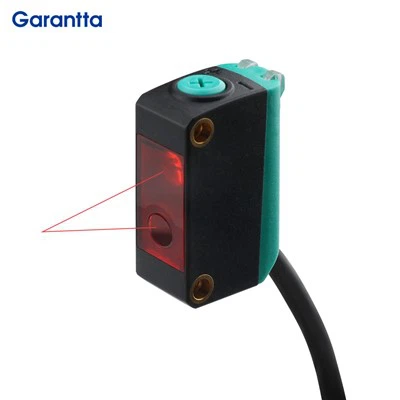
1. Employing a laser light source, the concentrated beam and extremely small divergence angle enable precise detection at the millimeter or even micrometer level

2. The engineering plastic square casing boasts high mechanical strength, excellent impact and vibration resistance, guaranteeing long-term stable operation in industrial environments

3. The sensor itself features a millisecond-level fast response time (≤1ms), meeting the detection requirements of high-speed production lines

4. The square design facilitates integration, enabling standardized and modular installation on equipment, and simplifying debugging and maintenance. Compared to cylindrical designs, the square structure offers greater efficiency in compact spaces, allowing for close arrangement and saving internal space

Send Inquiry
Download
Description
Technical Parameters
Size & Wiring

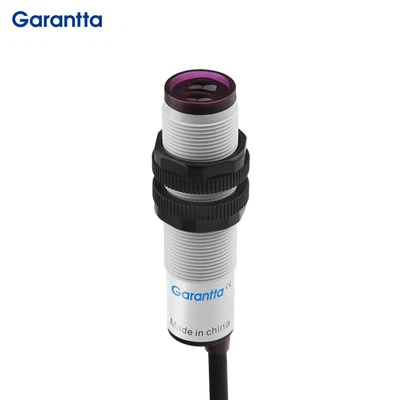
A laser beam sensor is a commonly used non-contact sensor, usually composed of an emitter and a receiver, which can detect distance or position by measuring the photoelectric current changes between the two. This type of sensor is often used in high-precision automated production lines, mechanical processing, and other fields. Radiation sensor is a commonly used non-contact sensor, usually composed of an emitter and a receiver, which can detect distance or position by measuring the photoelectric current changes between the two. This type of sensor is often used in high-precision automated production lines, mechanical processing, and other fields.


Instructions on laser beam sensor


1. Regular use

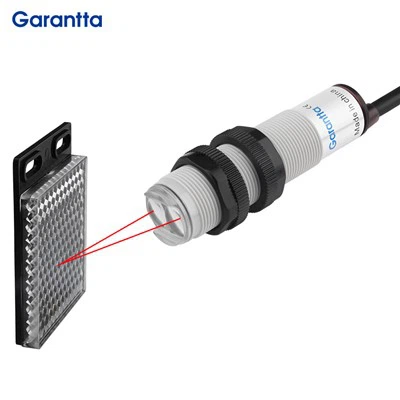
The emitter and receiver of the reflective photoelectric sensor are relatively mounted on the same optical axis. When there is an object between the two, detect the object based on the change in transmitted light and input it to get out.

2. Installation instructions

The photoelectric switch can be directly installed on the mounting hole or mounting bracket.

3. Adjustment instructions

Align the light emitter and receiver, and connect both to the power supply. At this moment, the green LED should remain constantly on. If the orange LED is also constantly on, it is necessary to check the photoelectric switch to see if they are on the same optical axis or if there are any objects obstructing them.

4. Object detection

Place the detection object in the emitting beam so that the light spot falls on the object, and at this time, the receiver receives no light, the orange LED will light up

5. Maintenance measures

We suggest that you regularly clean the surface of the lens and check if the joints and screws are loose


Laser Sensor-1
Laser Sensor
Laser Sensor-2
Laser Sensor-4


Selection steps for laser beam sensor


  • What about detection distance?
  • What about working with power AC or DC?
  • Confirmed your standard special working environment
  • Choose the detection methods: through-beam type, retro-reflective type, diffuse reflection type, background suppression type
  • Connection method: two/three/four wire lead-out type, connector type
  • Output form: NPN NO NC; PNP NO NC
  • Determine the body model
  • Attachment: Connector and reflector board


FAQ


Q: Precautions for using the square laser beam sensor:

A: 1) Sensors should not be installed in the following locations: direct sunlight, high temperatures, areas where frost may form, or areas with corrosive gases.
2) Do not use the same wiring conduit or conduit as power lines or power lines, or use shielded wires for connecting wires.
3) The connecting wire should not be too thin, and the length should not be too long.
4) After turning on the power, it is necessary to wait for a certain amount of time before conducting the test.

Q: Laser Beam Sensor installation process requirements:

A: The installation method of the sensor is correct, and the position or sensitivity of the sensor should be adjusted after installation, so that the sensor can accurately detect the corresponding signal. The installation process requirements of the circuit:
1) The selection of connecting wires is correct.
2) The connection points of the circuit are reliable and firm, and the maximum length of exposed copper wire cannot exceed 2mm.
3) All wires entering the wiring row should be numbered and fitted with a number tube.
4) The maximum number of connecting wires for the same terminal block should not exceed 2. Safety requirements for installation work: During the assembly process, it is necessary to adhere to the principle of "safety first",

Q: Please read the following requirements carefully after using the Laser Beam Sensor

A: 1) To use a straight or cross screwdriver, pointed nose pliers, and wire stripping pliers correctly to prevent accidents of hand injury caused by the screwdriver or pliers during operation;
2) After the installation is completed and the wiring is confirmed to be correct, power can be sent for testing.
3) Disassembly and assembly should be carried out in a power outage state.
4) When using instruments for live measurement, it is necessary to follow the safety regulations for instrument use.
5) During installation, do not use tools to knock on the installation components to prevent damage to the equipment.


Hot Tags: laser beam sensor, China laser beam sensor manufacturers, suppliers, factory, wide beam photoelectric sensor, Photoelectric Fork Sensor, Optical Laser Sensor, Micro Laser Displacement Sensor, industrial laser distance sensor, through beam photo sensor

Micro Laser Sensor

Micro Laser Sensor-3

Send Inquiry